Gullu
Rainy Day Activities for Toddlers and Preschoolers: 20 Indoor Ideas
Short answer: On a rainy day, a 2- to 5-year-old needs movement first, then something for the hands, then something quiet. The 20 ideas below use things most homes already have, and many come from the CDC's own activity tips for each age. Plan short blocks and switch between active and calm.
What are 20 indoor activities, sorted by energy level?
Here is the whole list in one table. "Source" shows where an idea appears in the CDC or NAEYC activity lists we read. Ideas marked "ours" are common home activities with no official source behind them.
| # | Activity | Energy | Ages | Source |
|---|---|---|---|---|
| 1 | Freeze dance: dance, then freeze when the music stops | High | 3 to 5 | CDC, 4 years |
| 2 | Red light, green light down the hallway | High | 3 to 5 | CDC, 4 years |
| 3 | Follow the leader: straight lines, turns, tiptoes, backwards | High | 2 to 5 | CDC, 30 months |
| 4 | Roll, kick and throw a soft ball | High | 2 to 3 | CDC, 2 years |
| 5 | Copy my moves: take turns leading a dance | High | 3 to 5 | CDC, 4 years |
| 6 | Cushion path across the room | High | 2 to 5 | Ours |
| 7 | Big box play: a car, a bus or a house to color and sticker | Medium | 2 to 4 | CDC, 30 months |
| 8 | Block towers: build, knock down, build again | Medium | 2 to 4 | CDC, 2 years |
| 9 | Dress up with grown-up shoes, hats and shirts | Medium | 2 to 5 | CDC, 2 years |
| 10 | Pretend cooking with safe kitchen things | Medium | 2 to 5 | CDC, 30 months |
| 11 | Help make a snack: wash fruit, stir, pour | Medium | 3 to 5 | CDC, 3 years; NAEYC |
| 12 | Tub or sink play with cups, spoons and a funnel | Medium | 2 to 3 | CDC, 2 years |
| 13 | Playdough: squish, pinch, roll balls | Low | 2 to 5 | CDC, 3 years; NAEYC |
| 14 | Coloring and drawing from an activity box | Low | 2 to 5 | CDC, 3 years |
| 15 | Finger painting | Low | 2 to 4 | CDC, 2 years; NAEYC |
| 16 | Puzzles with shapes, colors or animals | Low | 2 to 5 | CDC, 2 years; NAEYC |
| 17 | Stringing large beads or dry pasta | Low | 3 to 5 | CDC, 3 years |
| 18 | Snipping paper with child-safe scissors | Low | 4 to 5 | CDC, 5 years; NAEYC |
| 19 | Matching games and I Spy | Low | 3 to 5 | CDC, 3 and 5 years |
| 20 | Picture books: "What is happening in the picture?" | Low | 2 to 5 | CDC, 5 years |
Ages are a rough guide based on which CDC age page lists the idea. Stay close with water, small objects and scissors. Large beads and dry pasta are choking risks for children who still put things in their mouths.
Which activities burn energy indoors?
The ones at the top of the table: dancing, stop-and-go games, follow the leader and ball play. Start the day with these, and come back to them whenever the mood turns.
Young children need to move a lot, rain or not. The World Health Organization's guidelines for children under 5 say children aged 1 to 4 should spend at least 180 minutes a day in physical activity of any intensity, spread through the day. For ages 3 and 4, at least 60 of those minutes should be moderate to vigorous. The same guidelines say children should not be restrained for more than 1 hour at a time, and that long periods of sitting should be avoided (WHO).
That is a whole-day total, not one session. Indoors it adds up from many short bursts.
- Let your child choose. The CDC's tips for ages 4 and 5 say a child has more fun when they can pick the activity, and offer music and dancing as one choice (CDC, 5 years).
- Use stop-and-go games. The CDC suggests red light, green light and freeze dance to help a 4-year-old learn to stop and wait when excited (CDC, 4 years).
- Make space safe. Clear one room or a hallway of sharp corners and things that slide.
Which art and coloring activities fill a long afternoon?
Set up an art corner and let it run in stages. The CDC's tips for 3-year-olds suggest an "activity box" with paper, crayons and coloring books, and coloring and drawing lines and shapes together (CDC, 3 years). For 5-year-olds it suggests keeping a box of crayons, paper, paint, child scissors and glue for creative play.
One way to stretch it:
- Free drawing. Blank paper and crayons. No prompt.
- A printed page. Let your child pick one. Rainy day coloring pages and weather pages match the view from the window. Rainbows are for when it stops.
- Cut and stick. Older preschoolers cut out the colored picture and glue it onto a new sheet.
- Box art. Color and sticker a large cardboard box, an idea from the CDC's 30-month tips (CDC, 30 months).
- Gallery. The CDC suggests hanging a 2-year-old's art on the wall or refrigerator so they can see it (CDC, 2 years).
Do not expect long stretches. The CDC lists paying attention for 5 to 10 minutes during an activity, such as arts and crafts, as a milestone for age 5. Younger children often do less. See how long can kids sit and color.
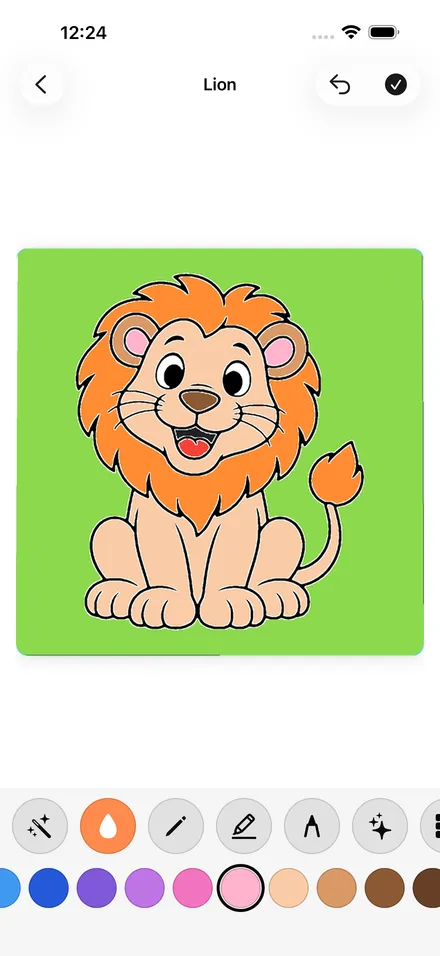
This site has 100 free printable pages. Each theme page shows which pictures are free to print, and how to print coloring pages covers paper and ink. No printer? Five sample pages can be colored in the browser at Color Online. That counts as screen time, so see the next section. If mess is the worry, see mess-free coloring.
What are screen-free ideas for 3-year-olds?
Everything in the table is screen-free. For a 3-year-old, these five are a good start, and all come from the CDC's 3-year tips:
- Playdough. The CDC says squishing, pressing and pinching it builds hand and finger muscles for writing, buttoning and cutting.
- The activity box. Paper, crayons and coloring books in one place the child can reach.
- Helping with a meal. Washing fruit and vegetables or stirring.
- Matching games. Find the same object in a book or around the house.
- Opposites games. Get down low and say "I am small," then stand up and say "I am big."
Rainy days are when screen limits slip. For reference, the CDC's tips for ages 2 to 4 say to limit screen time to no more than 1 hour a day of a children's program with an adult present, and the WHO guidelines give the same 1 hour for ages 2 to 4, adding that less is better. If you do use a screen, sit with your child and choose something where they make things. See screen time and creative apps.
What can a child do when home sick?
Pick from the low-energy rows, and follow your child's lead. This is not medical advice. If your child is ill and you are worried, call your doctor.
Low-effort ideas that work from a sofa or bed:
- Picture books. Read aloud, or let your child tell the story from the pictures.
- A coloring page on a tray. One page, three or four crayons, nothing that rolls away.
- Simple puzzles. Ones your child already knows.
- Matching games or I Spy. No materials needed.
A sick child may want none of it and just need rest and company. That is fine. For more calm ideas, see quiet time activities.
What goes in a rainy day printable pack?
Print a small pack ahead of time and keep it in a folder with crayons, so it is ready before the rain is.
- Two or three rainy day or weather pages
- One page from your child's favorite theme, such as dinosaurs, unicorns or cars and trucks
- One simple page from bold and easy for a younger sibling
- Five sheets of blank paper
Browse all themes at coloring pages. Only the pages marked free are printable. The others are previews of pages in the Gullu app.
FAQ
What do you do with a 2-year-old on a rainy day?
Keep it simple and physical. The CDC's tips for age 2 include balls to kick, roll and throw, block towers to build and knock down, dress up, simple puzzles, and crayons or finger paint with you beside them.
What do you do with a 3-year-old when it is raining?
Move first with dancing or follow the leader, then offer playdough, an activity box with paper and crayons, or helping to make a snack. All of these are in the CDC's tips for ages 30 months and 3 years.
How much active play does a preschooler need on an indoor day?
The WHO guideline for ages 3 and 4 is at least 180 minutes of physical activity across the day, with at least 60 minutes of it moderate to vigorous. It does not change for bad weather, so indoor movement games matter.
How long will a toddler stay with one activity?
Not long. The CDC's attention milestone of 5 to 10 minutes is for age 5. Plan many short activities and expect to switch often.
Are there free rainy day coloring pages?
Yes. See rainy day coloring pages. The pages marked free print on one sheet each.
Sources
- CDC, "Milestones by 2 Years": https://www.cdc.gov/act-early/milestones/2-years.html
- CDC, "Milestones by 30 Months": https://www.cdc.gov/act-early/milestones/30-months.html
- CDC, "Milestones by 3 Years": https://www.cdc.gov/act-early/milestones/3-years.html
- CDC, "Milestones by 4 Years": https://www.cdc.gov/act-early/milestones/4-years.html
- CDC, "Milestones by 5 Years": https://www.cdc.gov/act-early/milestones/5-years.html
- NAEYC, "Help Your Child Build Fine Motor Skills": https://www.naeyc.org/our-work/families/help-your-child-build-fine-motor-skills
- World Health Organization (2019), "To grow up healthy, children need to sit less and play more": https://www.who.int/news/item/24-04-2019-to-grow-up-healthy-children-need-to-sit-less-and-play-more