Gullu
Quiet Time Activities for 3-, 4- and 5-Year-Olds When Naps Stop
Short answer: Quiet time is a daily rest period with calm, independent play for children who no longer nap. A research review found that very few children stop napping before age 2 and 94% have stopped by age 5, and the World Health Organization says sleep at ages 3 to 4 "may include a nap." Books, puzzles, playdough and coloring in a small box work well, with a few choices so a child can switch when interest fades.
What is quiet time, and when does it replace naps?
Quiet time is a parenting and preschool term, not a medical one. It means a set part of the day when a child rests or plays calmly, usually alone and usually where the nap used to be.
Naps fade at different ages. A 2020 review pooled studies of children's napping from around the world. It found that fewer than 2.5% of children stop napping before age 2, and 94% have stopped by age 5. The authors called ages 3 to 5 a "particularly dynamic period," with large differences between studies, and they noted that the quality of the underlying studies varied (Staton et al., 2020).
Official sleep guidance leaves room for both napping and not napping:
| Age | Total sleep in 24 hours | What it says about naps | Source |
|---|---|---|---|
| 1 to 2 | 11 to 14 hours | "including naps" | WHO; CDC, 2 years |
| 3 to 4 | 10 to 13 hours | "which may include a nap" | WHO |
| 4 and 5 | 10 to 13 hours | "including naps" | CDC, 4 years; CDC, 5 years |
The American Academy of Pediatrics (AAP) explains that these numbers are total sleep in a 24-hour period, so a nap counts toward the total (AAP). None of these sources names an age when naps should end. If you are unsure whether your child still needs a nap, or sleep is a struggle, ask your pediatrician.
How long should quiet time last at each age?
No official body sets a length. We looked for one in the WHO, CDC and AAP pages above and did not find it, so we will not give a number per age.
What the sources do offer is a sense of scale for attention. The CDC's 5-year checklist says a child "pays attention for 5 to 10 minutes during activities," such as story time or arts and crafts, and adds that screen time does not count (CDC, 5 years). That is one activity, for a 5-year-old. The CDC checklists for ages 3 and 4 give no attention figure.
So think of quiet time as several short activities in a row, not one long one. Practical ways to set the length:
- Start short and build. Begin with a length your child manages happily, then stretch it over days and weeks.
- Make the end visible. A timer or a song list helps a child who cannot read a clock.
- Keep the time of day steady. The AAP's sleep advice favors a regular daily routine, with the same nap time and play times, because it helps children feel secure.
- Let sleep happen. If your child falls asleep, they probably needed it.
Which activities can a 3-year-old do alone?
Ones they have already done with you. Quiet time is not the moment for a new skill. These ideas come from activity lists by the CDC and NAEYC, the US early childhood association. The grouping by age is ours.
| Age | Activities to try alone | Where the idea comes from |
|---|---|---|
| 3 | Looking at picture books; crayons and coloring books; playdough; simple puzzles; stringing large beads | CDC's 3-year tips suggest an "activity box" with paper, crayons and coloring books, and playdough (CDC, 3 years) |
| 4 | All of the above, plus drawing people, building with small blocks, pegs in a board, puppets | NAEYC lists puzzles, pegs, small blocks, puppets and drawing for fine motor skills |
| 5 | All of the above, plus child scissors and glue, copying letters from their name, longer puzzles | CDC's 5-year tips suggest a box with crayons, paper, paint, child scissors and glue |
Safety comes first when a child is alone. Leave out anything small enough to choke on, and keep scissors, glue and paint for times when you are in the room unless you know your child handles them well. Stay within earshot.
Children under 3 are a different case and need closer watching. For that age, see coloring for 2-year-olds.
What goes in a quiet time box?
A few things, changed often. A box that looks the same every day stops being interesting.
A starter box for a 3- to 5-year-old:
- 3 or 4 picture books
- a small set of crayons and 5 to 10 coloring pages
- a blank pad
- one puzzle
- a tub of playdough with a roller
- a sticker sheet
- a few toy animals, cars or figures
Tips that keep it working:
- Rotate. Swap half the box each week. Head Start's standards for US preschool programs ask teachers to change materials "intentionally and periodically" to support children's interests (Head Start).
- Keep it for quiet time only. It stays special that way.
- Let your child choose. The CDC encourages "free play," where a child follows their own interests and tries new things (CDC, 30 months).
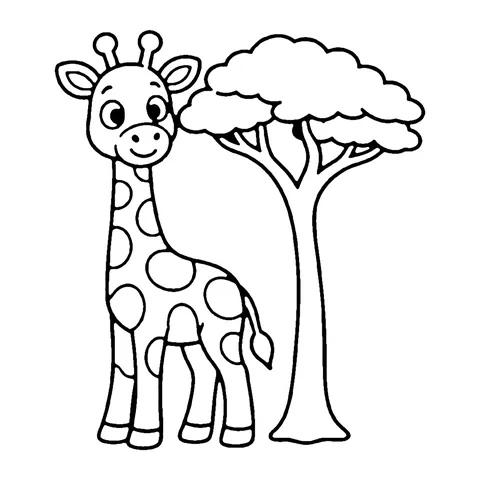
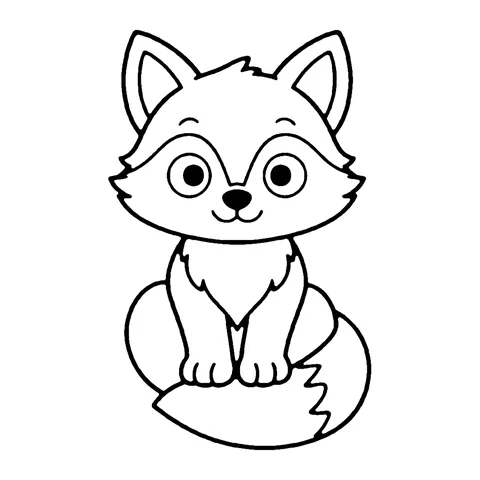
- Print pages ahead. Gullu's website has 100 free printable coloring pages. Pick a mix from the coloring pages section, such as bold and easy pages and pages for 3-year-olds. See how to print coloring pages.
Is coloring a good quiet time activity?
Yes, for most children. It is calm, it needs no help once the page and crayons are out, and it has no fixed end, so a child can stop and come back. The CDC and NAEYC both include crayons and drawing in their activity lists for this age.
Keep expectations loose. Zero to Three's advice on early drawing is "no need for instructions," and to "notice the process, not just the product" (Zero to Three). A page with three scribbles still counts.
Some children do not enjoy coloring, and that is fine. Offer blank paper, stickers or playdough instead. See what to do if your child does not like coloring, and how long a preschooler can sit and color for what is realistic. For what coloring does and does not do for development, see benefits of coloring.
Do screens count as quiet time?
They are quiet, but they are a different thing, and the limits still apply. The WHO recommends no more than 1 hour of sedentary screen time a day for ages 2 to 4, and says less is better. The CDC's tips say the same, with an adult present. Note that the CDC does not count screen time in its attention milestone.
The AAP's 2026 guidance moved away from fixed limits toward "quality, context and conversation" (AAP). On sleep, the AAP recommends keeping screens out of children's bedrooms and turning them off at least an hour before bedtime. If quiet time happens in the bedroom, a screen-free box fits that advice.
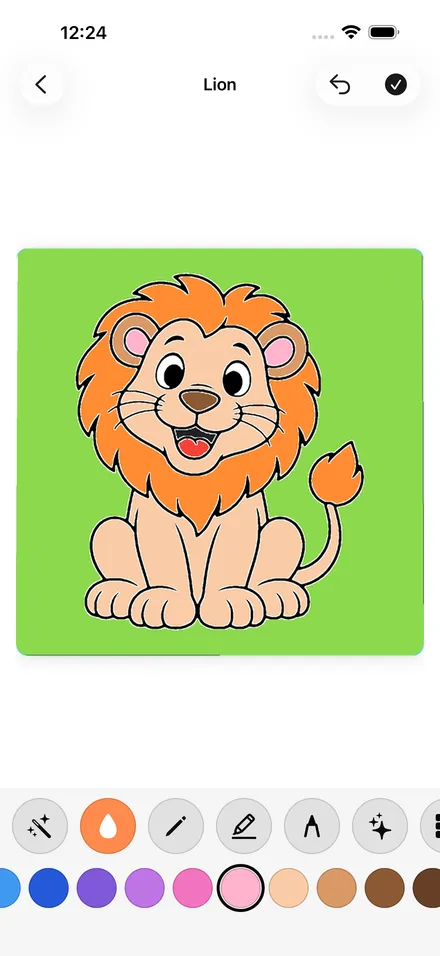
If you do use a tablet for part of quiet time, choose something calm and without ads, and count it toward the day's total. A coloring app is one option. Gullu, for example, has no ads on iPhone, iPad and Mac. It is still screen time. More in screen time and creative apps.
Quiet activities for preschool rest time
In group care, the idea is the same: rest is offered, not forced. Head Start's standards, which apply to its programs in the United States, say that programs running 6 hours or longer must give preschoolers a regular time each day when they "are encouraged but not forced to rest or nap," and must provide "alternative quiet learning activities for children who do not need or want to rest or nap."
Rules for other preschools differ by country and region. Activities that suit a room where some children are asleep:
- books on a mat
- coloring pages on a clipboard
- lacing cards or large beads
- puzzles on a tray, so pieces stay together
- playdough at one table
For more on running coloring in a group, see coloring activities for the preschool classroom.
FAQ
At what age do kids stop napping?
It varies a lot. In a 2020 review of napping studies, fewer than 2.5% of children had stopped before age 2 and 94% had stopped by age 5.
What if my child will not stay in the room?
No official source covers this. Many families start with a short time, stay nearby and lengthen it slowly. If rest and sleep are an ongoing struggle, ask your pediatrician.
Is quiet time as good as a nap?
The sources here do not compare them. Sleep guidance counts total sleep in 24 hours, so a child who has dropped the nap needs enough sleep at night.
Can I leave my 3-year-old alone for quiet time?
Stay within earshot and check in. Choose activities with no small parts, and keep scissors and paint for supervised times.
How many activities should I put out?
No official number exists. A handful is enough. Since the CDC lists 5 to 10 minutes of attention on one activity at age 5, a few choices let a child switch.
Sources
- Staton, S., Rankin, P. S., Harding, M., Smith, S. S., Westwood, E., LeBourgeois, M. K., & Thorpe, K. J. (2020). Many naps, one nap, none: A systematic review and meta-analysis of napping patterns in children 0–12 years. Sleep Medicine Reviews, 50, 101247: https://pubmed.ncbi.nlm.nih.gov/31862445/
- World Health Organization, "To grow up healthy, children need to sit less and play more" (2019): https://www.who.int/news/item/24-04-2019-to-grow-up-healthy-children-need-to-sit-less-and-play-more
- American Academy of Pediatrics, HealthyChildren.org, "Healthy Sleep Habits: How Many Hours Does Your Child Need?" (last updated August 7, 2026): https://www.healthychildren.org/English/healthy-living/sleep/Pages/healthy-sleep-habits-how-many-hours-does-your-child-need.aspx
- American Academy of Pediatrics, HealthyChildren.org, "Helping Kids Thrive in a Digital World: AAP Policy Explained": https://www.healthychildren.org/English/family-life/Media/Pages/helping-kids-thrive-in-a-digital-world-AAP-policy-explained.aspx
- CDC, "Milestones by 2 Years": https://www.cdc.gov/act-early/milestones/2-years.html
- CDC, "Milestones by 30 Months": https://www.cdc.gov/act-early/milestones/30-months.html
- CDC, "Milestones by 3 Years": https://www.cdc.gov/act-early/milestones/3-years.html
- CDC, "Milestones by 4 Years": https://www.cdc.gov/act-early/milestones/4-years.html
- CDC, "Milestones by 5 Years": https://www.cdc.gov/act-early/milestones/5-years.html
- NAEYC, "Help Your Child Build Fine Motor Skills": https://www.naeyc.org/our-work/families/help-your-child-build-fine-motor-skills
- Zero to Three, "Learning to Write and Draw": https://www.zerotothree.org/resource/learning-to-write-and-draw/
- US Head Start Program Performance Standards, 45 CFR 1302.31, "Teaching and the learning environment": https://headstart.gov/policy/45-cfr-chap-xiii/1302-31-teaching-learning-environment