Gullu
Airplane Activities for Toddlers and Preschoolers: A Small Kit That Works
Short answer: Pack a small bag of toys, books and snacks and plan to play along, which is what the American Academy of Pediatrics advises for flights with young children. A few crayons, printed coloring pages and stickers cover the tray table, and a tablet with content that works offline is a reasonable backup. Bring more small activities than you think you need and change them often.
What should I pack for a 2-, 3- and 4-year-old?
A small bag of familiar things, sorted so you can hand over one at a time. The American Academy of Pediatrics (AAP) travel tips say to "pack a bag of toys and snacks to keep your child occupied during the flight" (AAP, travel safety tips). Its flying guide adds toys and books, and says to be ready to play with your child the whole time (AAP, flying with baby).
The table matches packing ideas to what each age can do, using the CDC milestone pages. The packing column is our practical reading, not an official list.
| Age | What the CDC describes | Ideas for the bag |
|---|---|---|
| 2 | Art with crayons; simple shape, color or animal puzzles; pointing to things in a book (CDC, 2 years) | 3 or 4 thick crayons, a few printed pages, stickers, a board book, a small soft toy |
| 3 | Draws a circle when shown; an "activity box" with paper, crayons and coloring books (CDC, 3 years) | Crayons, a thin stack of coloring pages, sticker sheets, a picture book, a few toy animals or cars |
| 4 | Holds a crayon or pencil in the fingers; draws a person; names a few colors (CDC, 4 years) | Colored pencils or crayons, coloring pages, a blank notebook, a simple card game, a story book |
Three habits help at any age:
- Wrap or bag each item. One small thing at a time lasts longer than a full bag tipped out at once.
- Mix old and new. A favorite toy for comfort, plus one or two things your child has not seen.
- Save something for the descent. The AAP notes that pressure changes can hurt little ears. It suggests a bottle or pacifier for babies, and for older children, drinking through a straw or chewing gum.
The AAP's flying guide, written with babies in mind, also suggests traveling at a time when your child naturally sleeps, if you can, and booking a window seat. Aisle seats put small arms and legs near carts and hot drinks.
Which coloring supplies work on a tray table?
Small, dry and hard to lose. A tray table is narrow and tilts toward your child's lap, so less is better.
- Crayons, not a full box. Take four to six in a zip bag. Triangular crayons roll less, and a dropped crayon on a plane is usually gone.
- Printed pages on a clipboard or in a folder. Loose sheets slide. Print them before you leave home. Gullu's website has 100 free printable pages, and the first page of each of its 47 lands comes in one PDF, so you can print a stack in one go from the coloring pages section. The airplane pages suit the day, and bold and easy pages suit younger children. See how to print coloring pages for paper and settings.
- Stickers. They need no table at all.
- A blank notebook. Take turns drawing something for the other person to color.
- Skip paint, loose glitter, markers without attached caps and anything with many tiny parts. For low-mess choices in general, see mess-free coloring.
Which tool suits which age is covered in crayons, markers or pencils. The AAP notes that 2-year-olds still put things in their mouths, so keep an eye on small pieces (AAP, 2-year-olds).
Which activities need no screen?
Plenty, and most need nothing you have to buy. The World Health Organization (WHO) says that when young children are sitting, "engaging in reading and storytelling with a caregiver is encouraged," and names reading, storytelling, singing and puzzles as valuable sitting-down activities (WHO).
Ideas that work in a seat:
- Books and made-up stories. Let your child choose what happens next.
- I Spy. The CDC lists it among games for 5-year-olds, and a simpler "find something blue" version works for younger children (CDC, 5 years).
- Quiet songs with hand actions.
- Window watching. Clouds, trucks on the ground, the wing.
- The safety card and magazine. Name the pictures together.
- Snack time, slowly. Small pieces in a cup take a while to eat.
- A short walk. The WHO advises that children under 5 should not be restrained in a seat for more than 1 hour at a time. On a plane that is not always possible, so when the seat belt sign is off, a walk to the back and a stretch can help.
Zero to Three's advice for drawing also fits travel: there is "no need for instructions" (Zero to Three). Let your child scribble on the page any way they like.
Which apps work without Wi-Fi?
Only the ones you have tested at home. Many apps and videos need a connection to load, and in-flight Wi-Fi is not something to count on.
Before the trip:
- Download everything on Wi-Fi at home. That includes shows, music and any content inside apps.
- Test in airplane mode. Turn on airplane mode, open each app and try what your child will actually use.
- Charge the tablet and pack child-size headphones.
- Lock it down. Guided Access keeps an iPad in one app, and blocking in-app purchases avoids surprises. Steps are in set up an iPad for a young child.
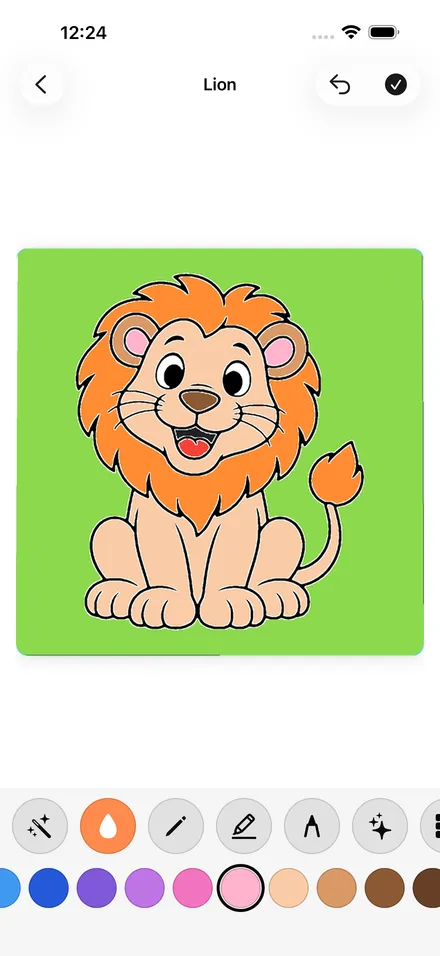
As one example, once it is installed, Gullu on iPhone, iPad and Mac works without Wi-Fi or mobile data: coloring, drawing, "Draw it" tracing, the gallery and saving all work offline, and there are no ads on those devices. Buying or restoring Gullu Plus needs a connection, so do that before you leave. We have not tested the Android version offline, so we make no claim for it.
For what to look for in any children's app, see how to choose a coloring app.
How much screen time is OK on a travel day?
More than usual is understandable, and the official guidance leaves room for it. The usual numbers are these: the WHO recommends no more than 1 hour of sedentary screen time a day for ages 2 to 4, and the CDC's tips say the same, with an adult present.
A flight is not a usual day. The AAP's own flying guide says a tablet with videos "can be a good backup if other playthings aren't doing the job," and that even for children under 2, screen time "can be a lifesaver during air travel" and will not do serious harm.
The AAP's 2026 media guidance also moved away from simple time limits, toward "quality, context and conversation" (AAP, digital media policy explained). Its family media plan advice is to choose quality content and avoid content with lots of ads (AAP, family media plan).
A simple travel-day plan: start with the crayons, books and games, keep the tablet as the backup, and sit with your child while they use it when you can. More detail is in screen time and creative apps.
What do airlines and security allow?
Rules differ by country and airline, so check yours before you fly. The points below are from United States agencies, as examples.
Security (US Transportation Security Administration). Children's toys, bags and blankets go on the X-ray belt with other carry-on items. Children 12 and under can leave their shoes, light jackets and headwear on, and will not be separated from their parent or guardian (TSA). The AAP suggests telling children beforehand that their backpack or doll will go through the machine and come back.
Scissors. The TSA allows scissors in carry-on bags only if the blades are less than 4 inches from the pivot point, and the officer at the checkpoint has the final say (TSA, scissors). Leaving child scissors at home is simpler.
Drinks and food. The TSA allows formula, breast milk, toddler drinks and baby or toddler food, including puree pouches, in amounts over 3.4 oz (100 ml) in carry-on bags, and they do not need to fit in the quart-sized liquids bag. Tell the officer at the start of screening.
Seats. The US Federal Aviation Administration (FAA) says the safest place for a child under 2 on a US airplane is an approved child restraint system, not a lap, and "strongly urges" using one for the whole flight (FAA). A child in their own seat with a tray table is also easier to set up with crayons.
Airline rules on devices, headphones and bags vary. Check your airline's website.
FAQ
How do I entertain a 2-year-old on a plane?
Use short turns: a book, then stickers, then a snack, then crayons, then the window. Expect to play along. The AAP says to be ready to play with your child the whole time.
Are crayons allowed in carry-on bags?
The TSA's page on traveling with children does not mention crayons. It says children's toys and bags are screened by X-ray. Rules differ outside the US, so check with your airport if you are unsure.
How many activities should I bring?
No official number exists. Bring more small activities than you think you need, since delays happen, and keep the bag light enough to carry with a child on your hip.
Is it bad to give my toddler a tablet for the whole flight?
The AAP's flying guide calls a tablet a good backup and says it will not do serious harm, even under 2. Offer other things first, sit with your child when you can, and go back to your usual routine after the trip.
What about long car trips?
Many of the same ideas work. See road trip activities for kids and restaurant activities for kids.
Sources
- American Academy of Pediatrics, HealthyChildren.org, "Flying With Baby: Parent FAQs & Tips for Safer, Easier Air Travel" (last updated March 3, 2026): https://www.healthychildren.org/English/safety-prevention/on-the-go/Pages/Flying-with-Baby.aspx
- American Academy of Pediatrics, HealthyChildren.org, "Tips for Safe & Stress-Free Family Travel" (last updated February 5, 2025): https://www.healthychildren.org/English/safety-prevention/on-the-go/Pages/Travel-Safety-Tips.aspx
- American Academy of Pediatrics, HealthyChildren.org, "Helping Kids Thrive in a Digital World: AAP Policy Explained" (last updated June 3, 2026): https://www.healthychildren.org/English/family-life/Media/Pages/helping-kids-thrive-in-a-digital-world-AAP-policy-explained.aspx
- American Academy of Pediatrics, HealthyChildren.org, hand and finger skills of 2-year-olds: https://www.healthychildren.org/English/ages-stages/toddler/Pages/Hand-and-Finger-Skills-2-Year-Olds.aspx
- American Academy of Pediatrics, HealthyChildren.org, "How to Make a Family Media Plan": https://www.healthychildren.org/English/family-life/Media/Pages/How-to-Make-a-Family-Media-Use-Plan.aspx
- World Health Organization, "To grow up healthy, children need to sit less and play more" (2019): https://www.who.int/news/item/24-04-2019-to-grow-up-healthy-children-need-to-sit-less-and-play-more
- CDC, "Milestones by 2 Years": https://www.cdc.gov/act-early/milestones/2-years.html
- CDC, "Milestones by 3 Years": https://www.cdc.gov/act-early/milestones/3-years.html
- CDC, "Milestones by 4 Years": https://www.cdc.gov/act-early/milestones/4-years.html
- CDC, "Milestones by 5 Years": https://www.cdc.gov/act-early/milestones/5-years.html
- Zero to Three, "Learning to Write and Draw": https://www.zerotothree.org/resource/learning-to-write-and-draw/
- US Transportation Security Administration, "Traveling with Children": https://www.tsa.gov/travel/special-procedures/traveling-children
- US Transportation Security Administration, "What Can I Bring? Scissors": https://www.tsa.gov/travel/security-screening/whatcanibring/items/scissors
- US Federal Aviation Administration, "Flying with Children": https://www.faa.gov/travelers/fly_children