Gullu
Early Finisher and Indoor Recess Ideas for Pre-K and Kindergarten
Short answer: A good early finisher activity is one a child can start alone, stop at any moment and choose for themselves. For pre-K and kindergarten that means a small menu of open-ended choices, such as drawing, playdough, puzzles and a coloring station with real choices. Indoor recess needs the opposite, which is movement first and quiet tables second.
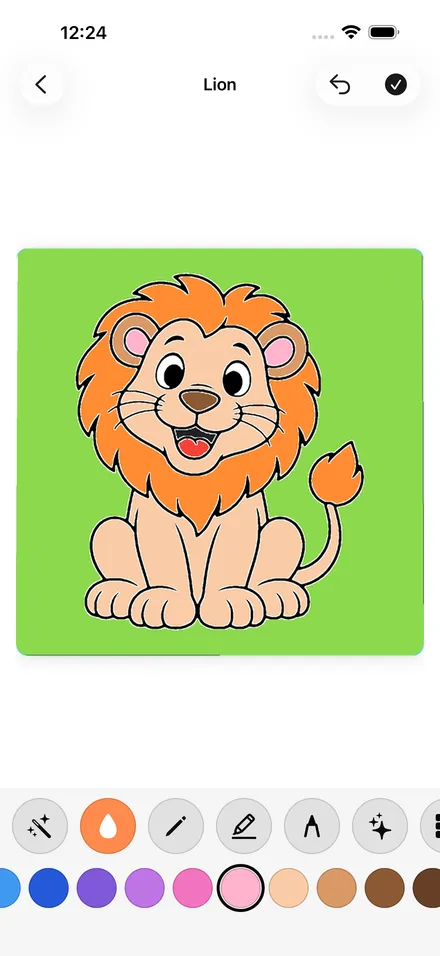
Gullu has 100 free printable coloring pages on this site. You may print them and make copies for the children in your class. Please do not sell them. The full terms are on the license page.
What makes a good early finisher activity?
Three things: no adult needed, no fixed end, and a real choice.
- No adult needed. You are still teaching the rest of the group. If the activity needs you to explain it each time, it is not an early finisher activity.
- No fixed end. A child may have two minutes or fifteen. The activity should feel complete at either length.
- A real choice. In its list of what marks process-focused art, NAEYC includes "The art experience is a child's choice," along with no step-by-step instructions and no right or wrong way to create (NAEYC, Bongiorno).
Keep the time short. The CDC lists paying attention for 5 to 10 minutes during activities, such as story time or arts and crafts, as something most children can do by age 5 (CDC, 5 years). Many of your early finishers are younger than that. Plan for a few focused minutes, not half an hour.
12 early finisher ideas that need no prep
Set these out once and leave them in the same place all term. Several come straight from NAEYC's list of everyday fine motor practice, which includes drawing with crayons, pencils and markers, cutting with child-safe scissors, playdough, puzzles, pegs and small blocks (NAEYC, fine motor skills).
- Drawing box. Plain paper and crayons. No prompt needed.
- Coloring folder. A folder of printed pages on different themes. The child picks one.
- Unfinished work tray. Yesterday's page or drawing goes here, so a child can return to it.
- Playdough mat. One ball of dough and a few tools, such as craft sticks.
- Puzzle shelf. Two or three puzzles that one child can finish alone.
- Peg board or lacing cards. Quiet, and easy to stop at any point.
- Small block tray. A tray limits the building space and the noise.
- Scissor strip box. Paper strips to snip with child-safe scissors, with a tub for the pieces.
- Book basket. Picture books the class already knows, to "read" from the pictures.
- Name writing sheet. The child's name to trace or copy. See when should a child write their name for what to expect by age.
- Add to the picture. A coloring page with empty space around it. The child draws what happens next.
- Draw for a friend. A card or picture for a classmate or someone at home.
Offer only three or four of these at a time. Too many choices slows the choosing.
How do you run a coloring station without it becoming busywork?
Give children choices, and keep it one option among several. A coloring page is a product-focused activity, because there is a finished picture in mind. A NAEYC article on preschool art says both product-focused and process art have value for young children, and that teachers can use product-focused art to support fine motor and executive function skills (NAEYC, Fernando-Smith).
Coloring turns into busywork when every child gets the same sheet and is told to finish it. NAEYC's list of product-focused signs includes children asking "Can I be done now?" and "Is this right?" Those two questions are a useful warning sign at any station.
What helps:
- Let the child pick the page. Keep five or six themes in the folder, such as animals, dinosaurs, shapes and alphabet pages.
- Let the child pick the colors. A purple dog is fine.
- Allow stopping. NAEYC's tips include letting children "come and go from their art at will." The unfinished work tray makes this possible.
- Add blank paper. Some children would sooner draw. Put plain sheets beside the printed ones.
- Notice, do not grade. NAEYC suggests commenting on what you see, for example "Look at all the yellow dots you painted."
- Pick simple pages. Big shapes and bold outlines suit short visits. The bold and easy and preschool pages are made for this.
If a child avoids the station, that is fine. See what to do when a child does not like coloring. For how coloring fits beside open-ended art, see are coloring pages bad for kids.
What works for indoor recess on a rainy week?
Start with movement, then open the quiet tables. Children who have missed outdoor play need to move before they can settle. The CDC's tips for 5-year-olds say to try to make time for active play each day, and add that a child has more fun when they can choose the activity (CDC, 5 years). Its tips for 4-year-olds suggest red light, green light and freeze dance as games that teach a child to stop and wait when excited (CDC, 4 years).
A simple shape for any indoor recess: ten minutes of a whole-group movement game, then free choice of quiet tables.
| Day | Movement game first | Quiet tables after |
|---|---|---|
| Monday | Freeze dance | Coloring folder, puzzles, blocks |
| Tuesday | Red light, green light | Playdough, drawing box, book basket |
| Wednesday | Follow the leader around the room | Rainy day coloring pages, peg boards, blocks |
| Thursday | Copy my moves, taking turns to lead | Card making, puzzles, playdough |
| Friday | Children vote for the week's favorite game | Free choice of all tables |
Two things keep the week calm. Keep the tables the same so nobody needs new instructions. And change only one thing a day, such as the coloring theme. Weather pages fit a wet week well.
What goes in a one-page emergency sub plan?
Activities that a visiting adult can run with no login, no screen and no special materials. Print this list, add your class details, and keep it with a folder of printed coloring pages.
- Arrival (10 minutes). Children choose from the drawing box, the coloring folder or the puzzle shelf.
- Circle (10 minutes). A picture book the class knows. Ask what is happening in the pictures and what might come next.
- Movement (10 minutes). Freeze dance or red light, green light.
- Table time (15 minutes). Each child picks one coloring page from the folder. When done, they draw on the back or add to the picture.
- Share (5 minutes). Three or four children say one thing about their picture. A good prompt is "Tell me about your picture."
- Early finishers. Book basket or unfinished work tray.
- If it rains. Repeat step 3, then open the quiet tables.
Write on the sheet where the crayons, paper and scissors are kept, and which children need extra help. A plan this plain can be used on any day of the year.
Which free printable sets are ready to print?
All 100 free pages on this site print without a login. Each theme page shows which of its pictures are free to print. Useful starting points for a classroom folder:
- Preschool coloring pages
- Alphabet and numbers
- Shapes
- Community helpers
- Seasons and weather
- Back to school
For paper size, ink saving and copying, see how to print coloring pages. For activities tied to letters, numbers and stories, see 20 coloring activities for preschool and kindergarten.
FAQ
How many early finisher choices should I offer?
Three or four at a time is plenty for this age. Swap one choice every week or two so the menu stays familiar but not stale.
Is coloring a good early finisher activity for kindergarten?
It can be, when the child chooses the page and the colors and may stop at any time. NAEYC notes that product-focused art can support fine motor and executive function skills. Offer it beside open-ended choices such as blank paper and playdough.
How long should an early finisher activity last?
Plan for a few minutes. The CDC lists paying attention for 5 to 10 minutes during an activity as a milestone for age 5, and younger children often manage less.
What can children do at indoor recess without screens?
A movement game first, such as freeze dance, then quiet tables with drawing, coloring, puzzles, blocks and playdough. All of these appear in CDC or NAEYC activity lists for young children.
Can I photocopy Gullu's free coloring pages for my class?
Yes. The license allows printing the free pages and making copies for the children in your class, group or library session. Selling them is not allowed.
What should early finishers not be given?
Avoid extra worksheets that feel like a penalty for working fast. If finishing early always means more of the same task, children learn to slow down.
Sources
- Bongiorno, L. (2014). "How Process-Focused Art Experiences Support Preschoolers." NAEYC, Teaching Young Children, 7(3): https://www.naeyc.org/resources/pubs/tyc/feb2014/process-art-experiences
- Fernando-Smith, L. (2023). "What Will We Make? Using Process Art to Spark Preschoolers' Development." NAEYC, Teaching Young Children, 16(2): https://www.naeyc.org/node/4824
- NAEYC, "Help Your Child Build Fine Motor Skills": https://www.naeyc.org/our-work/families/help-your-child-build-fine-motor-skills
- CDC, "Milestones by 4 Years": https://www.cdc.gov/act-early/milestones/4-years.html
- CDC, "Milestones by 5 Years": https://www.cdc.gov/act-early/milestones/5-years.html